

10 ways to re-engage lapsed customers with card-linked offers
In a hurry? Here are the top three take aways from our blog on 10 ways to re-engage lapsed customers using card-linked offers.
1: Lapsed customers are not gone: Chances are, they've just stopped choosing you. That matters because they already know your brand, have bought from you before and are often easier to win back than starting from scratch with someone new.
2: Card-linked offers (CLOs) make it easier to win back lapsed customers: CLOs remove friction at the point of payment. There is no code to remember or extra step to take, which makes it more likely that intent turns into real action.
3. Re-engagement works when it is timely, relevant and simple: Re-engagement works best when it's relevant and simple, not when it is loud or complicated. The strongest strategies give customers a clear reason to return, at the right moment, in a way that feels easy to act on.
Got time to stick around? Let's dive a little deeper.
What are lapsed customers (and why they matter)
Why customers lapse in the first place
What are card-linked offers, and why do they help win back lapsed customers?
10 ways you can win back lapsed customers with card-linked offers
How card-linked offers fit into a broader strategy
Lapsed customers are not a lost audience: win them back with CLO & Pluxee UK
FAQs: Lapsed customers and card-linked offers
Every brand has customers who once bought regularly and then quietly drifted away. Re-engaging them is not just about getting attention again, it is about giving them a clear, timely reason to come back. In a market where value and convenience matter more than ever, card-linked offers can help brands reduce friction, reconnect at the right moment and turn inactivity into action. Before we get into the tactics, it is worth understanding what lapse really looks like and why it matters.
For a deep dive on all-things CLO, read our guide to card-linked offers once you've finished this blog.
What are lapsed customers (and why they matter)
Lapsed customers are people who used to engage with your brand but no longer do. Depending on your model, that might mean:
- Someone who has not purchased in 30, 60 or 90 days
- A previously loyal customer who has stopped visiting
- A regular spender who has shifted to another provider
The definition matters less than the behaviour because these are customers who already know your brand, trust your product or service, and have spent with you before, which means they are often faster—and more cost-effective—to win back than acquiring someone new.
The challenge is that once behaviour changes, it tends to stick. That is what makes re-engagement both urgent and valuable.

Why customers lapse in the first place
Understanding why customers lapse is key to deciding how to re-engage them. Below, we list three common reasons why once-loyal customers become lapsed.
1. Changing financial priorities
Customers are feeling the pressure, and it is changing how they spend. Over 80% of UK consumers say they are concerned about their finances, and nearly half are actively switching to lower-cost options.
At the same time, discretionary spending has fallen to a three-year low as households prioritise essentials. The result is simple: loyalty is no longer assumed. If the value is not clear or immediate, customers are far more willing to delay, switch or walk away altogether.
2. Competitive alternatives become habits
Competition today is not just broader, it's stickier. Once customers try something new, it often becomes the new default. Around 4 in 10 UK consumers have already switched away from their primary retailer, and most now shop across multiple options rather than staying loyal to one (Talking Retail).
At the same time, value has overtaken brand as the main driver of decision-making. That means customers are not just open to change, they are actively looking.
3. Friction starts to matter more
Friction rarely feels like the main issue, but it's often the deciding one. When 72% of UK consumers say convenience is a key part of how they choose where to spend, even small barriers start to matter (Retail Times). That might be remembering a code, navigating an app or understanding how a reward works. On their own, they are minor. Combined, they create just enough effort for customers to look elsewhere.
The challenge is made worse by complexity.
Over a quarter of consumers say they struggle to keep track of loyalty schemes at all. In a market where customers already have multiple options, “slightly harder” is often all it takes to lose them.
What are card-linked offers, and why do they help win back lapsed customers?
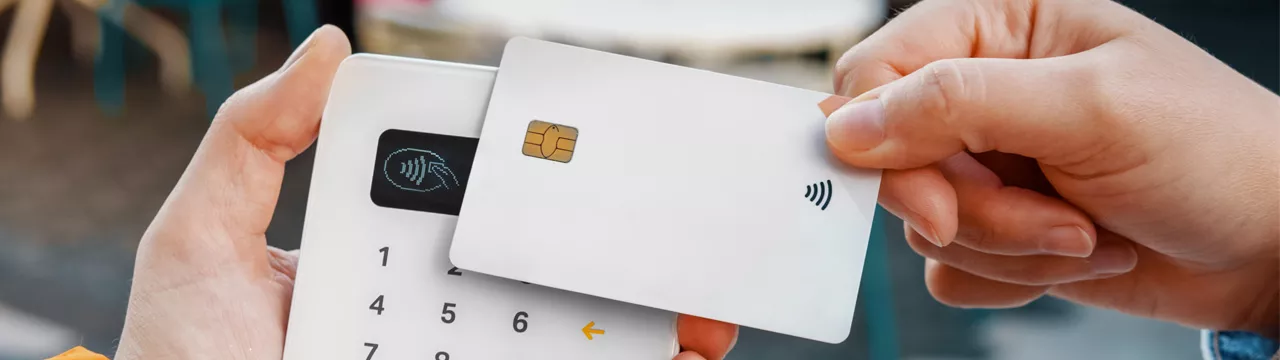
Card-linked offers (CLOs) connect rewards directly to a customer’s payment card. There’s no code, no voucher and no extra step at checkout. Customers simply pay as they normally would, and the reward is applied automatically.
From a re-engagement perspective, that does three important things:
- It removes friction at the point of purchase
- It brings value closer to the moment of decision
- It connects marketing directly to real spend
Which is exactly what you need when thinking about how to re-engage lapsed customers in a way that actually drives behaviour change.
10 ways you can win back lapsed customers with card-linked offers
From being relevant to making it easy, targeting consumers with the right offers and measuring the outcome, here are 10 ways to win back lapsed customers with card-linked offers.
1. Start with a clear, relevant reason to come back
If a customer has lapsed, you need to answer a simple question for them: “Why should I come back now?”
Generic messaging rarely cuts through. A clear, targeted incentive does.
Card-linked offers allow you to base that incentive on real behaviour:
- What they used to spend
- When they used to visit
- What categories they engaged with
Instead of offering a blanket discount, you can create something that feels specific and considered. That recognition is often the difference between being ignored and being acted on.
2. Make re-engagement feel effortless
One of the biggest barriers to winning back lapsed customers is effort. If returning requires:
- Remembering a code
- Activating an offer
- Going through extra steps
…many customers simply will not bother.
CLOs remove that barrier entirely because the incentive is already in place and ready to use.
That simplicity changes behaviour. It turns passive intent into action because there is nothing left to do.
3. Lower the threshold for return
When customers have been away for a while, there is often hesitation.
- Will it be worth it?
- Has anything changed?
- Is it the right time to spend?
High thresholds increase that hesitation.
Lowering the entry point through smaller spend triggers or tiered rewards gives customers a low-risk way back in. Once that first interaction happens again, momentum builds.
4. Align offers with real-world spending behaviour
A common mistake in re-engagement is trying to force behaviour.
Customers already have natural moments when they are more likely to spend, such as payday, weekends, and seasonal spikes. The role of your offer is not to create those moments. It is to be present when they happen.
Card-linked offers allow you to sit closer to those decisions. The incentive is there when the customer is ready, not when you hope they will be.
5. Focus on rebuilding habits, not one-off visits
Winning a customer back once is useful. Winning them back repeatedly is where value sits. That's why the most effective strategies for winning back lapsed customers focus on frequency, not just initial conversion.
You can structure CLOs to encourage repeat behaviour:
- Follow-up offers after the first redemption
- Increasing rewards for consecutive visits
- Limited windows to encourage faster return
The goal is to shift behaviour from occasional to habitual again.
6. Treat different types of lapsed customers differently
Not all lapsed customers behave the same way. Some were frequent, high-value customers. Others engaged occasionally, and your approach should reflect that.
Higher-value customers may justify:
- Stronger incentives
- More personalised targeting
- Faster re-engagement efforts
Whereas lower-value segments may respond well to lighter-touch nudges. Segmentation ensures you are not overspending or underdelivering.
7. Combine CLOs with simple awareness channels
Card-linked offers remove friction at the point of purchase, but they still need visibility, which is where channels like email, app notifications or digital messaging come in.
The key is to keep these touchpoints simple:
- Highlight the value
- Reinforce the timing
- Avoid adding extra steps
Email marketing can be effective when used as a reminder rather than the main mechanism, supporting broader re-engagement campaigns for lapsed customers rather than complicating them.
8. Use data to continuously improve performance
There is no single ‘best’ offer structure. Different customers respond to different mechanics:
- Cashback vs percentage discount
- Fixed rewards vs variable rewards
- Short-term urgency vs longer windows
The advantage of card-linked offers is that you're measuring real transactions, not just engagement. Over time, this allows you to build a clearer view of what drives return behaviour and refine accordingly.

9. Automate re-engagement where possible
One of the biggest opportunities is moving from manual campaigns to a more continuous approach.
Instead of asking: “What campaign should we run to win back lapsed customers?” Shift to: “What triggers should automatically activate when customers begin to lapse?”
Automation supports:
- Faster response times
- More consistent targeting
- Scalable re-engagement
This approach is especially important when thinking about what automated campaigns work best for lapsed customer reactivation—those that respond to behaviour, not just calendar dates.
10. Measure what actually matters
Re-engagement is not about opens, clicks or impressions. It is about:
- Customers returning
- Spending increasing
- Behaviour shifting over time
Card-linked offers give you direct insight into this because they are tied to real transactions, allowing you to move beyond surface-level metrics and focus on commercial outcomes.
How card-linked offers fit into a broader strategy
CLOs are most powerful when they are part of a wider approach to engagement, a topic we cover in our retailers guide to card-linked offers.
That means:
- Reducing friction across the journey
- Making value visible at the right time
- Using data to inform action
For retailers and partners, it is not just about reactivating customers, it’s about creating an experience that makes it easier for them to stay engaged in the first place.
Lapsed customers are not a lost audience: win them back with CLO & Pluxee UK
They are customers who have made a different choice, often because it felt easier, clearer or more immediate.
Card-linked offers help you close that gap.
By removing friction, aligning with real behaviour and making value tangible, they give customers a simple reason to return and a better reason to stay.
With Pluxee UK, brands can use card-linked offers to reconnect with customers in a way that is measurable, low-friction and built around real spending behaviour. That means less guesswork, stronger targeting and a clearer route from re-engagement activity to commercial impact.
FAQs: Lapsed customers and card-linked offers
What are lapsed customers?
Lapsed customers are people who previously engaged with your business but have stopped interacting or purchasing over a defined period.
How do you re-engage lapsed customers?
The most effective approaches combine timing, relevance and ease, using targeted incentives, personalised messaging and low-friction redemption to encourage return behaviour.
How can you win back lapsed customers using card-linked offers?
By linking incentives directly to payment behaviour, card-linked offers make it easier for customers to return without taking extra steps, reducing drop-off at the point of purchase.
What does “winning back lapsed customers” actually mean?
It refers to reactivating customers who have stopped engaging, to restore previous behaviour or build new, consistent habits over time.
What campaigns work best for lapsed customer reactivation?
Campaigns that are triggered by behaviour, tailored to previous activity and easy to act on, particularly those supported by automation and transaction-level insight, tend to deliver the strongest results.
Sources: