

Card-linked offers: Reviving the casual dining sector

Quick answer:
Card-linked offers can help casual dining brands attract new diners and encourage return visits by linking targeted cashback or rewards to a customer’s registered payment card. Once an eligible offer is activated, a qualifying payment triggers the reward without a voucher code. Operators can connect campaign activity to actual transactions and measure customer acquisition, spend and repeat visits. CLOs can support growth, but they won’t solve the sector’s wider cost pressures.
Three things to know:
1: Casual dining is being squeezed from both sides: Consumers are more selective about when they eat out, while restaurant operators continue to face significant cost pressures. Casual dining is particularly exposed because diners increasingly expect both quality and clear value.
2. Card-linked offers (CLOs) can make value more targeted and measurable: Rather than relying solely on blanket discounts, CLOs can connect incentives with payment cards and eligible transactions, helping brands target customer behaviour and measure campaign performance against actual purchases.
3. We know the model can deliver results in casual dining: In one Pluxee banking rewards programme, a casual Italian-inspired dining brand generated £536,000 in incentivised spend and acquired 10,000 new customers in one month, returning £17.90 for every £1 invested.
Contents:
How can card-linked offers help revive the casual dining sector?
Why is casual dining under pressure?
Why card-linked offers fit the casual-dining challenge
Does CLO actually work in casual dining?
Do card-linked offers support longer-term activity?
From clicks to conversions: making restaurant marketing measurable
Cashback, discount or loyalty: what's right for casual dining?
From blanket discounting to smarter incentives
Could CLOs help revive casual dining?
Card-linked offers: Reviving the casual dining sector
Getting diners through the door takes more than another discount. For casual dining brands, the challenge is to offer value while giving customers an experience worth choosing again. Rising operating costs leave little room for promotions that fail to deliver. Card-linked offers (CLOs) bring a different approach: targeted rewards that connect restaurant marketing with actual customer spending. They can help operators attract new diners, encourage return visits, and understand the return on investment. Here, we explore where CLOs fit into the casual dining picture, what Pluxee’s programme results show and why smarter incentives matter more than simply cutting the menu price.
Following on from our blog, ‘The retailer’s guide to card-linked offers’, this blog explores the role of CLO specifically in the casual dining industry.
How can card-linked offers help revive the casual dining sector?
Card-linked offers can support casual dining’s recovery by helping operators compete for a more considered share of diners’ spending. Rather than cutting prices for everyone, brands can focus incentives on specific goals, such as winning a first visit or bringing a lapsed customer back, then assess the resulting transactions. That makes the opportunity less about another discount and more about giving selective diners a reason to choose your restaurant.
The challenge isn't getting people to like eating out. It's giving increasingly selective diners a compelling reason to choose you.
Consumers are increasingly value-conscious and also highly responsive to smart, personalised incentives.
Jonathan Bedford, Merchants & Partners Director, Pluxee UK
That's the opportunity for card-linked offers because casual dining isn't disappearing. It's changing. The outlook for UK restaurants isn't as simple as "people are eating out less".
In 2025, the UK restaurant market was valued at £18.5 billion. Eating-out participation subsequently fell to 53.3% in Q1 2026, down three percentage points year on year and to its lowest level since Q3 2021 (Lumina Intelligence).
Yet people who eat out aren't necessarily spending less.
Average spend per visit reached £18.35 in Q1 2026, up 5.5% year on year, while average visit frequency among active consumers increased to 1.6 visits per week. Lumina Intelligence says consumers are becoming more selective, purpose-led and budget-aware about dining occasions (Lumina Intelligence).
There's growth ahead, too. Restaurant Online forecasts the UK service-led restaurant market to reach £18.7 billion in 2026.
So, this isn't simply a story of declining demand. It's a battle for a more considered share of spend, and for casual dining brands, that distinction matters.
Why is casual dining under pressure?
Casual dining sits in a difficult part of the market. UK dining is increasingly polarised. At one end are businesses offering clear value and convenience. At the other are those offering distinctive premium experiences. Casual dining occupies much of the contested space between them and remains exposed to labour, ingredient, business rate and utility pressures (Moore Kingston Smith).
Moore Kingston Smith also reports fewer spontaneous visits, and consumers scrutinise menu prices while looking for promotions, set menus, and clear value propositions.
This behaviour puts operators under pressure to answer several questions simultaneously:
- How do we encourage customers to choose us?
- How do we provide value without constantly lowering headline prices?
- How do we attract new diners?
- How do we encourage existing customers to return?
- How do we know whether our marketing actually generated revenue?
This is where CLOs become more than another promotional mechanic.

Why card-linked offers fit the casual-dining challenge
Card-linked offers fit the casual dining challenge because they let operators offer customers value without reducing menu prices for everyone. Incentives can focus on winning new diners or bringing back previous customers, while transaction data helps brands assess the spend and visits each campaign drives. For restaurants balancing selective demand with rising costs, that means a more focused approach to promotions and a clearer view of what their marketing delivers.
The important question here is: What can they do differently for casual-dining operators?
CLOs connect an eligible reward to a customer's debit or credit card. They can then trigger qualifying rewards through the transaction, rather than requiring traditional voucher codes or coupons.
For casual dining, that creates several important opportunities.
1. Give value-conscious diners another reason to choose you
Value has become an increasingly important part of the dining decision.
Perceived value for money, quality, brand familiarity and trust, convenience, and menu variety shape restaurant choice in 2026. That doesn't mean consumers want the cheapest meal. Nearly 80% of eating-out occasions in Q1 2026 involved quality-led consumers (Lumina Intelligence).
The challenge for casual dining, therefore, is to deliver quality plus perceived value. CLOs can add another layer of value through an eligible reward without relying exclusively on lowering the advertised menu price.
Traditional discounting versus CLOs
The table below shows the difference between promotional discounts and consistent card-linked offers.
| Traditional discount promotion | Card-linked offer | |
| Redemption | Customer typically needs to remember/use an offer | Eligible reward linked to registered payment card |
| Customer proposition | Often focuses heavily on price | Cashback/reward can add value around the restaurant proposition |
| Targeting | Can be broad | Can use purchase behaviour for segmentation |
| Measurement | Redemptions and sales | Eligible transactions can be connected to campaign activity |
| Customer journey | May include a voucher or code | Reward can be triggered through the qualifying payment |
| Useful | Tactical sales promotion | Acquisition, re-engagement and measurable growth |
CLOs don't mean restaurants should abandon promotional activity.
They let operators think differently about who receives an incentive and what behaviour the incentive is meant to influence.
Quick takeaway:
Start with the diner behaviour you want to influence instead of offering a discount for everyone. CLOs can focus incentives on acquisition or re-engagement without lowering advertised menu prices across the board.
2. Win more of the occasions that still matter
Fewer spontaneous restaurant visits make each dining decision more valuable. Consumers are increasingly consolidating visits into fewer, more intentional occasions. Weekend dining remains particularly valuable, while weekday dining faces competition from retail, food-to-go and delivery (Lumina Intelligence).
That's a major challenge for casual dining.
A restaurant no longer competes only with the chain opposite. Depending on the occasion, it's competing with food-to-go, delivery and other ways consumers can spend their discretionary income.
Card-linked offers can provide an additional incentive to choose one brand over another.
The strategic question then shifts from "How do we discount our menu?" to "Which customer behaviour do we want to influence?"
For example:
| Commercial challenge | Potential CLO objective |
| Customer hasn't visited previously | Customer acquisition |
| Existing customer hasn't returned | Re-engagement |
| Visits are concentrated at certain times | Influence relevant dining occasions |
| Spend per visit needs attention | Measure transaction value |
| Campaign generates activity but commercial impact is unclear | Connect campaign to eligible transactions |
The precise campaign design depends on the operator's objectives, but the key shift is from indiscriminate promotion to targeting a specific commercial outcome.
3. Acquire customers without adding checkout friction
Attracting someone is only half the battle. The reward also needs to be easy to use, or it will discourage people from participating or returning.
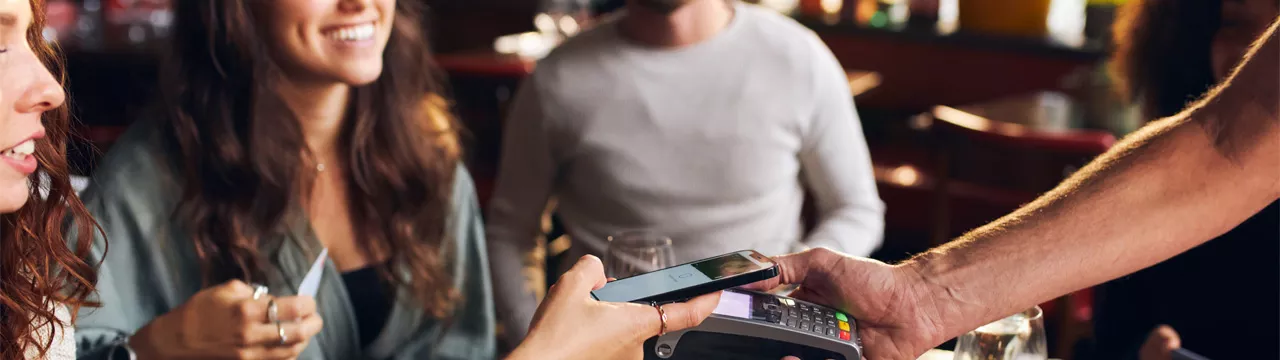
Traditional promotions can require customers to find a code, remember an email, click through an affiliate link or present a voucher. CLOs work differently. Once an eligible offer is activated and linked to a payment card, the reward can trigger when the customer makes a qualifying transaction with that card.
Promotion doesn't have to dominate the restaurant experience. The customer can eat, pay and receive the qualifying reward.
Does CLO actually work in casual dining?
Yes! Our casual dining programmes show that CLOs can deliver measurable customer acquisition and spend, with one campaign acquiring 10,000 new customers and generating £536,000 in incentivised spend in a month. These results demonstrate the model’s potential, but don't guarantee the same performance for every restaurant or campaign.
Casual-dining CLO example 1
A popular Italian-inspired casual-dining chain ran a banking rewards programme for one month across an addressable audience of 2.5 million.
The programme delivered:
- £536,000 in incentivised spend
- 12,000 incentivised transactions
- 10,000 new customers acquired
- 1.12 average purchase frequency
- £17.90 ROI for every £1 invested.
That's particularly significant in a market where operators need to show that promotional investment drives commercial outcomes.
Do card-linked offers support longer-term activity?
Absolutely. Card-linked offers can support ongoing activity, not just short promotional campaigns: one 12-month Pluxee casual dining programme recorded £2.5 million in incentivised spend across 63,000 transactions. This demonstrates their potential as a longer-term marketing channel, although it does not establish how much spending would have occurred without the offers.
A second modern Italian dining chain ran a 12-month banking rewards programme, again with an addressable audience of 2.5 million.
It delivered:
| Measure | Result |
| Members incentivised | 47,300 |
| Incentivised spend | £2.5m |
| Incentivised transactions | 63,000 |
| Average transaction value | £39.70 |
| Average repeat transaction frequency | 1.3 |
| ROI | £12.50 per £1 invested |
A third programme with another Italian dining chain delivered £949,000 in incentivised spend from 18,600 incentivised members, across 23,200 transactions, with an average transaction value of £40.90 and reported ROI of £12.50 per £1 invested.
These examples shouldn't be treated as a guarantee of future campaign performance.
They do, however, demonstrate something valuable: CLO activity in casual dining can be measured against transactions, spend, acquisition, frequency and ROI rather than simply marketing engagement.
From clicks to conversions: Making restaurant marketing measurable
One reason CLOs deserve attention isn't really about the offer. It's about measurement. Restaurant marketers have plenty of data available to them, including impressions, reach, clicks, email opens, social engagement, bookings, and voucher redemptions.
Those metrics can all tell you something.
The commercial question is harder: Did this marketing generate additional customer spend?
Card-linked offer campaigns use transaction-level data and closed-loop reporting to connect eligible transactions to campaign activity, enabling a much more commercially useful measurement framework for casual-dining operators.
| If your goal is... | Measure... |
| Acquire diners | New customer transactions |
| Generate revenue | Incentivised/incremental spend |
| Increase customer value | Average transaction value |
| Encourage return visits | Repeat transaction frequency |
| Demonstrate marketing effectiveness | ROI |
| Learn which audiences respond | Segment performance |
The distinction between attribution and incrementality matters.
Knowing an incentivised customer spent money is useful, but knowing whether the campaign generated behaviour beyond what would have happened anyway is more valuable. The Pluxee retailer CLO guide identifies uplift modelling and incrementality as methods for understanding revenue beyond baseline behaviour.
Quick takeaway:
Tracking a rewarded purchase shows what happened, not necessarily what the offer changed. Assess incremental spend against expected customer behaviour to understand whether a campaign created additional business.

Cashback, discount or loyalty: What's right for casual dining?
The right choice depends on your goal. Card-linked cashback can support acquisition and re-engagement, discounts suit tactical promotions, and loyalty schemes help build relationships with existing diners. They can work alongside each other rather than compete for the same job.
CLOs don't need to replace a restaurant's existing marketing channels because each has a different job.
| Approach | Best suited to |
| Card-linked offers | Transaction-led acquisition, re-engagement and measurable growth |
| Voucher/promo codes | Tactical promotions and immediate incentives |
| Restaurant loyalty programmes | Building repeat engagement with existing members |
| Paid search/social | Awareness, discovery and consideration |
| Set menus/off-peak promotions | Creating a visible value proposition for particular occasions |
The opportunity is to build CLOs into the wider customer-acquisition and retention mix rather than treat them as another version of a voucher.
From blanket discounting to smarter incentives
When consumers are watching what they spend, it can be tempting to respond with ever-more-prominent discounts. Yet the market evidence points to something more nuanced. Customers prioritise value, quality, and worthwhile experiences, rather than simply searching for the lowest possible price.
At the same time, casual dining continues to face substantial operating-cost pressures and softer demand as households reduce discretionary spending (Moore Kingston Smith). Giving margin away indiscriminately is therefore unlikely to be the whole answer.
A stronger approach is to ask:
- Who are we trying to reach?
- What behaviour are we trying to change?
- What incentive is appropriate?
- Did it cause an additional transaction?
- What did that customer spend?
- Did they return?
That's the shift CLOs can bring to restaurant promotions.
Could CLOs help revive casual dining?
No single marketing channel will solve the pressures facing casual dining. Labour costs, ingredients, rates, utilities and changing consumer behaviour are much bigger structural issues. Yet consumer demand hasn't disappeared.
People are simply becoming more selective about where they spend their money.
Active diners are visiting slightly more often, and average spend per visit is higher, while premium casual formats that combine accessible pricing with stronger food and atmosphere are benefiting from changing behaviour (Lumina Intelligence).
That's why CLOs are particularly interesting for the sector now. They don't solve casual dining economics. They can help operators compete more intelligently within them.
By using relevant incentives, linking marketing to eligible transactions, and measuring outcomes such as customer acquisition, spend, and repeat frequency, the question shifts from "How do we offer another discount?" to "How do we invest in the customers and behaviours most likely to create incremental growth?"
For a sector fighting harder for every discretionary dining occasion, that's a much more valuable question.
Key takeaway:
For casual dining brands, the opportunity isn’t another blanket discount; it’s a more focused reason for the right diners to choose you. Card-linked offers connect targeted incentives to measurable purchases, helping operators assess acquisition, spend, and repeat visits. The real test is whether that activity creates additional business, not simply whether customers redeem an offer.
FAQs
What are card-linked offers in restaurants?
Card-linked offers connect an eligible reward to a customer's registered debit or credit card. When the customer makes a qualifying purchase with the linked card, the reward can trigger automatically without a traditional promotional code or physical voucher.
Why are card-linked offers relevant to casual dining?
Casual-dining operators are facing both substantial operating-cost pressures and increasingly value-conscious consumers. CLOs provide a way to use targeted incentives while linking eligible campaign activity to actual transactions.
Can CLOs help restaurants acquire new customers?
They can be used as an acquisition channel. One Pluxee casual-dining CLO programme acquired 10,000 new customers in one month, alongside £536,000 of incentivised spend.
Can CLOs encourage restaurant customers to return?
CLO programmes can measure repeat transaction frequency. In one 12-month Pluxee dining programme, average repeat transaction frequency was 1.3; another recorded 1.25.
How can casual-dining brands measure a CLO campaign?
Depending on the campaign objective, measures can include incentivised and incremental spend, new customer acquisition, transaction volumes, average transaction value, repeat transaction frequency and ROI.
Are CLOs the same as restaurant discount vouchers?
No. A traditional voucher generally requires the customer to use or present the promotion. A card-linked offer connects an eligible reward to a registered payment card so a qualifying transaction can trigger the reward.
Do CLOs replace restaurant loyalty schemes?
Not necessarily. Loyalty programmes can focus on relationships with existing members, while CLOs can support customer acquisition, re-engagement, and transaction-led marketing. The right mix depends on the commercial objective.
Sources: