Prepaid reward card vs cash bonus vs gift voucher: which is best for employees?

Recognising a great performance, celebrating a milestone or saying thank you should feel meaningful. For employers, the challenge is choosing a reward that employees will genuinely value. Cash bonuses, gift vouchers and prepaid reward cards can all play a part, but they offer different levels of choice and can feel different to receive.
This guide compares the three options to help you decide which best fits the occasion, your employees’ needs and whether you’re making a one-off gesture or planning ongoing recognition.

Quick answer:
The best employee reward depends on its purpose: cash bonuses suit compensation, gift vouchers are ideal for one-off thank-yous, and prepaid reward cards offer flexibility, employee choice and the potential for ongoing recognition. The key is choosing a reward that makes employees feel valued while giving them something genuinely useful.
Top three takeaways from our blog comparing vouchers, prepaid cards, and cash for employee rewards:
1. Cash bonuses work best when the payment is really compensation: They're highly flexible, but when money lands alongside normal pay, the connection between the payment and the recognition moment can become less distinct.
2. Gift vouchers work well for simple, one-off rewards: They make the reward feel separate from salary, although the employee's choice depends on the retailer or voucher network available.
3. Prepaid reward cards create a middle ground: They can keep the reward distinct from salary while giving employees broad choice over how to use it, with the potential to use the same mechanism for future rewards.
Is a cash bonus, gift voucher or prepaid reward card best for employees?
Cash is strongest for compensation and unrestricted financial support; gift vouchers suit simple one-off gifting. At the same time, prepaid reward cards are worth considering when you want recognition, employee choice and a reward mechanism you can use again.
The key is matching the mechanism to the moment.
Think about what you're actually trying to achieve:
- Choose a cash bonus when the payment is substantial, closely connected with compensation, or employees need unrestricted access to the money.
- Choose a gift voucher when you want a simple and clearly defined one-off thank you.
- Consider a prepaid reward card when you want the reward to feel distinct from salary while giving employees broad choice over how they spend it and the ability to use the same mechanism for future rewards.
The most important distinction is this: Cash is primarily money. A voucher is primarily a gift. A prepaid reward card can sit between the two, providing spending flexibility while keeping the reward separate from everyday pay.
How do cash bonuses, gift vouchers and prepaid reward cards compare?
All three can reward employees effectively, but they differ significantly in flexibility, how distinctly they communicate recognition and whether they work best as a one-off reward or an ongoing mechanism.
| Cash bonus | Gift voucher | Prepaid reward card | |
| Best for | Substantial payments and compensation-led rewards | Simple, one-off gifting | Flexible recognition and repeat rewards |
| Employee choice | Very high | Depends on the voucher | High |
| Feels separate from salary | Usually less so | Yes | Yes |
| Suitable for a one-off reward | Yes | Yes | Yes |
| Suitable for repeat rewards | Yes, via payroll | Usually requires another voucher | Yes, where the card supports additional employer loads |
| Potential for a memorable reward moment | Can be lower if absorbed into normal pay | High | High |
| Spending restrictions | None | Depends on retailer/network | Depends on card acceptance |
| Potential ongoing employee value | Ends with the payment | Usually ends with the voucher | Can extend beyond the original employer reward |
| Tax treatment | Generally treated as earnings | Depends on structure and reason | Depends on structure and reason |
The right option isn't automatically the one with the most flexibility or features. It's the one that best fits the reason you're rewarding someone.
When is a cash bonus the best employee reward?
Cash bonuses work best when the payment is substantial, effectively part of an employee's compensation, or when giving them completely unrestricted financial choice matters more than creating a separate recognition experience.
Employers have good reasons to reach for cash. It's simple to understand, everyone knows what £500 means, and nobody has to choose a retailer or activate a card.
More importantly, cash gives people complete freedom.
If you want to provide financial support, make a significant performance-related payment, or deliver something employees will see as part of their overall compensation, cash may be exactly the right mechanism.
For UK employers, HMRC treats cash bonuses as earnings. They're added to the employee's other earnings, with PAYE tax and Class 1 National Insurance deducted through payroll.
Cash can make sense for:
- Annual bonuses
- Contractual or performance-related payments
- Commission (though you should also consider prepaid cards)
- Retention payments
- Substantial financial awards
- Circumstances where unrestricted financial support is the priority
- Situations where the payment is intentionally part of compensation
However, there is a difference between paying someone and recognising someone, and that's where psychology becomes important.

Why can cash feel different from an employee reward?
Cash can feel less distinct as a reward because once it enters someone's normal finances, it can become mentally absorbed into salary, bills, and everyday spending rather than staying connected to the achievement being recognised.
Imagine you've just received £100 in recognition for something brilliant you did:
- Scenario one: it appears alongside the rest of your income.
- Scenario two: you're given £100 specifically as a reward to spend.
Financially, both start with the same headline figure. Psychologically, they may not feel the same.
One useful behavioural concept is mental accounting: the tendency to mentally categorise money by what it's for or where it came from.
Applied to reward and recognition, it creates an interesting challenge.
Money entering someone's normal bank account can easily join the pot that pays for the weekly shop, energy bill, mortgage or train fare. Those are all valuable uses, but the connection between “I did something great at work” and “my employer recognised me for it” can become weaker when the money becomes part of everyday finances.
Cash provides maximum flexibility, particularly for larger incentives, while non-cash rewards can create a more distinct reward experience.
Remember, useful and memorable aren't always the same thing. When your objective is compensation, that's unlikely to be a problem, but when recognition matters more, it might be.
When is a gift voucher a better employee reward?
Gift vouchers work particularly well when you want a simple, one-off reward that feels clearly distinct from normal salary and gives employees an immediate sense that they've received something specifically for them.
Sometimes you don't need to build an ongoing reward mechanism.
If you want to say: “Thank you. This is for you,” gift vouchers can work brilliantly. They're clearly separate from salary, easy for employees to understand and can turn recognition into something tangible.
A retailer-specific voucher can steer the recipient toward a particular treat or experience, rather than letting the money disappear unnoticed into their normal finances.
That can be an advantage. It can also be the limitation.
A restaurant voucher isn't much of a reward if someone rarely eats out. A fashion voucher may be brilliant for one colleague and practically useless to another. Which brings us back to choice.
Gift vouchers are strongest when:
- You're giving a one-off thank you
- Simplicity matters
- Employees have meaningful retailer choice
- You don't need to reload the same reward mechanism later
- The reward is intended to feel clearly distinct from salary
- You're rewarding a particular occasion or moment
If Christmas is the specific use case, our 'Christmas vouchers vs Prepaid reward cards: Which creates more value?' guide goes much deeper into that decision. It identifies eVouchers as particularly well suited to a straightforward one-off festive thank you, while a prepaid reward card can support repeat rewards and longer-term value.
Where do prepaid reward cards fit?
Prepaid reward cards sit between cash and traditional gift vouchers, combining broad spending choice with a reward that can remain separate from an employee's normal salary. If you want the mechanics, read our blog, ‘What is a prepaid card for employees?’.
Prepaid cards create an interesting middle ground for employee rewards. They give you much of the choice associated with money, without necessarily adding another line to the payslip.
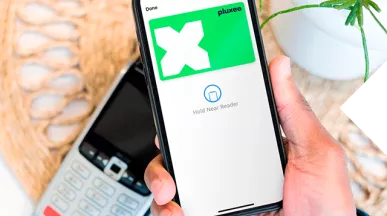
Employers can load cash rewards and incentives onto the Pluxee Card, connecting recognition, incentives and employee benefits into one mechanism, rather than limiting the card to a single reward occasion.
That means the employer chooses the reward value, but the employee chooses the value it creates in their life.
One person might spend £100 on a meal with their family. Someone else might put it towards something for the house, a weekend away, new clothes or even the weekly shop when money is tight.
Same £100. Different employee. Different life. Different value.

Why does employee choice matter when selecting a reward?
Choice matters because employees have different lifestyles, priorities and financial circumstances, so the same fixed reward will not create the same value for everyone.
Your workforce isn't one audience. You've got different ages, salaries, families, interests, locations and financial priorities, making choosing one universally brilliant reward across that workforce difficult.
More choice lets employees turn the same employer investment into something personally useful.
Rewards should respond to what employees want and need; recognition should be timely; behaviours should be clear; and any reward should fit the action being recognised.
Giving employees choice doesn't remove the emotional component of recognition -- quite the opposite. Recognition provides the meaning, and choice lets employees decide what to do with its value.
That's one reason prepaid rewards can occupy useful territory between payroll cash and a retailer voucher.
Is a prepaid reward card the same as a gift voucher?
No, because while both give an employee pre-funded spending power, prepaid reward cards can offer broader spending acceptance and reloadability, whereas many traditional gift vouchers are designed around a particular retailer, network or one-off reward.
- eVouchers aren’t necessarily limiting, and with Pluxee UK, your employees can choose from over 140 retailers.
- Prepaid cards can have broader acceptance and can be reloadable – even offer employees the chance to earn cashback.
For recognition, reloadability significantly changes the role of the reward mechanism.
- Instead of: recognise → issue reward → spend → finish.
- You can potentially build: recognise → load reward → spend → recognise again → load again.
The card becomes the reward mechanism, rather than representing a single reward.
Our ‘Staff reward card schemes: Your complete UK employer's guide’ explores that longer-term scheme design in greater detail, including implementation, measurement and engagement.
That's fundamentally different from issuing another voucher every time somebody does something worth celebrating.
What does psychology tell us about cash, vouchers and prepaid rewards?
The psychology of recognition suggests that the best reward isn't necessarily the one offering maximum financial freedom, but the one that balances usefulness with a clear sense that the employee has been specifically recognised.
Think of the options as a spectrum.
Cash bonus
Maximum spending freedom
↓
Often enters normal finances
↓
Can feel more like compensation
Prepaid reward card
Broad spending freedom
↓
Distinct from normal salary
↓
Can retain the feeling of a reward
↓
Can support repeat recognition
Gift voucher
More defined spending choice
↓
Clearly separate from salary
↓
Can create a strong one-off gifting moment
None is inherently better. The question is where you want your reward to sit on that spectrum.
For recognition specifically, there's an argument for protecting the distinction between ordinary earnings and the reward itself.
- Your salary says: “This is what we pay you to do your job.”
- Recognition says: “We saw what you did. It mattered. This is for you.”
The delivery mechanism shouldn't accidentally blur that message.
Rewards can influence behaviour, but they work best within an intentional culture where employees understand what is being recognised and why.
Can a prepaid reward card support employee financial wellbeing too?
Yes, because a prepaid reward card gives employees immediate choice over how to use employer-funded value, while certain schemes can keep providing value through employee top-ups and cashback after the original reward has been spent.
Don't assume everyone wants to treat themselves.
For one employee, a meal out could be the perfect expression of a £50 reward. Somebody else may genuinely value using the same £50 towards their groceries. That's the reward adapting to the employee, and this is where broad choice becomes particularly relevant.
With the Pluxee Card, employers can also choose to enable employees add their own money, so they can keep using the card after they've spent the employer-funded reward and access cashback opportunities at over 80 participating retailers.
More than a reward, it also becomes a salary-stretching employee benefit offering up to 15% cashback on everyday essentials. The employer reward can be the starting point, not necessarily the end, of the employee's value.
Are cash bonuses, gift vouchers and prepaid reward cards taxed differently?
Yes, potentially, but employers should never assume a particular reward is tax-free simply because of its format, as UK tax treatment depends on what is provided, how the scheme works and why the employee receives it.
Tax is where your reward strategy needs to meet payroll reality.
For cash bonuses, HMRC says the amount counts as earnings. Employers need to add it to an employee's other earnings and deduct PAYE tax and Class 1 National Insurance through payroll.
Things get more nuanced when people start talking about 'trivial benefits'. HMRC says all the relevant conditions must be met for a benefit to qualify.
It must:
- Cost £50 or less to provide
- Not be cash or a cash voucher
- Not be a reward for work or performance
- Not be included in the employee's contract
That third condition is especially important for reward and recognition.
- A £50 limit does not automatically mean you can give somebody a tax-free £50 reward for great performance.
- HMRC explicitly says a trivial benefit must not reward an employee's work or performance.
- There's also an important distinction between different types of vouchers.
HMRC states that cash and cash vouchers cannot qualify for the trivial-benefits exemption. In contrast, a qualifying non-cash gift voucher may qualify when all the other conditions are met.
Get clear on the regulations here.
For incentive awards more broadly, HMRC applies different reporting and tax rules depending on whether the award is cash, exchangeable for cash, a non-cash voucher or another form of non-cash award.
A simple rule for employers
Decide what you're rewarding first, choose the most appropriate reward mechanism second, and check the tax treatment of that specific scheme before launch.
Your payroll, finance or tax adviser should confirm the position for your circumstances.
How should employers choose between cash, a gift voucher and a prepaid reward card?
Start with the purpose of the payment rather than the product, because compensation, one-off gifting and ongoing recognition require different reward mechanisms.
Here's a simple way to decide.
Choose cash when
- The amount is substantial
- It's really compensation rather than recognition
- Employees need completely unrestricted access to the money
- You're paying a formal bonus, commission or another earnings-related amount
- Separating the payment from normal salary isn't important
Choose a gift voucher when
- It's a one-off thank you
- Simplicity matters
- You can offer meaningful retailer choice
- You intentionally want to create a defined gifting moment
- You don't need an ongoing reward mechanism
Consider a prepaid reward card when
- you want broad employee choice
- you want the reward to sit separately from salary
- you're planning repeat recognition or incentives
- you want the ability to load future rewards using the same mechanism
- you want employees to decide what the reward means to them
- you want the potential to connect recognition with wider everyday value
Which employee reward creates the most value?
The reward that creates the most value matches your objective: cash for compensation, vouchers for simple one-off gifting, and prepaid reward cards when you want to combine recognition, flexibility, and a repeatable reward mechanism.
The mistake is thinking only in terms of the figure.
£50 is £50.
Yet £50 absorbed into someone's normal finances, £50 to spend with a particular retailer and £50 held separately for someone to spend where it matters to them don't necessarily create the same employee experience.
That's why the better question isn't: “What's the best employee reward?”
It's: “What do we want this reward to achieve?”
If it's compensation, cash may win. If it's a simple gifting moment, a voucher may be exactly right. If you're trying to combine recognition, employee choice and a mechanism you can come back to again, a prepaid reward card is worth a closer look.
Key takeaway
The best reward isn't necessarily the one that gives employees the most money or the most choice. It's the one that makes the purpose of the reward clear, gives the employee value they can genuinely use and fits the moment you're recognising.
Great recognition isn't about handing everyone the same idea of value. It's about recognising the same achievement while giving people more freedom to decide what value looks like to them.
FAQs
Is a prepaid reward card better than a cash bonus?
A prepaid reward card can be better suited to recognition when you want broad employee choice while keeping the reward distinct from salary. In contrast, cash is usually more appropriate for compensation or where completely unrestricted access to money is the priority.
Is a prepaid reward card the same as a gift voucher?
No. Traditional gift vouchers are usually linked to a specific retailer or group of retailers, while prepaid cards can be more widely accepted. They may allow you to load additional funds after the initial reward.
Are employee reward cards tax-free in the UK?
No reward card should automatically be assumed to be tax-free, because UK tax treatment depends on the nature, purpose and structure of the reward.
HMRC's trivial-benefit exemption includes several conditions, including that the benefit costs £50 or less and isn't provided as a reward for the employee's work or performance.
Are gift vouchers tax-free for employees?
Some non-cash gift vouchers may potentially qualify as trivial benefits when all HMRC conditions are satisfied, but cash and cash vouchers cannot qualify for that exemption.
What is the best reward for employee recognition?
There isn't one universally best reward: cash suits compensation-led payments, gift vouchers suit clearly defined one-off gifts, and prepaid reward cards suit employers looking for a distinct, flexible, repeatable recognition mechanism.
Can employers use prepaid cards for repeat employee rewards?
Yes, where the scheme supports employer reloads, a prepaid card can be used as a repeatable reward mechanism rather than issuing a completely new voucher each time — our blog. 'What is a prepaid card for employees?' specifically identifies employer-loaded employee rewards as one use of prepaid cards.
What is the difference between a cash bonus and an employee reward?
A cash bonus usually forms part of financial compensation. UK PAYE treats it as earnings. At the same time, an employee reward is a broader concept that can include cash, vouchers, prepaid cards or non-cash recognition depending on what the employer wants to recognise.
Sources: